


 Netherlands
 Bestseller
 All Printers
 All Labels
 Money Counters
 All Accessories
Life can really take its toll on us, can't it? (laughs) One of the most annoying and common problems is residue from labels and stickers. No matter how well you peel them off, you often end up with an unsightly adhesive ring or a piece of paper. The good news is that removing label and sticker residue is not impossible! There are several methods that can make this task easier for you without compromising on cleanliness.
Nail polish remover
If you are struggling to remove stubborn label or sticker residue, you can try nail polish remover containing acetone - a strong solvent that can dissolve the adhesive of these labels and stickers. However, if you are an e-commerce seller looking for a more convenient solution that doesn't require additional clean-up, you should use stickers that leave no residue. These labels are a great option for business owners who need to label packages quickly and efficiently without having to worry about sticky residue.
Heating with a hairdryer
If you have a heat source such as a hairdryer available, this could be the best solution for removing labels. Try heating the label with a hairdryer until it loosens and can be peeled off more easily. You can also use this method with an iron or another heat source such as a stove or a curling iron – but be careful to avoid burns! Also, make sure that the surface you are working on is heat-resistant and will not melt or be damaged by high temperatures.
Proceed as follows:
1. Plug in your hairdryer and set it to the highest setting.
2. Hold the hairdryer about two inches above the sticker for about 10 seconds (making sure the sticker doesn't get too hot).
3. Continue heating the sticker until it softens and begins to peel off.
White vinegar
Another way to remove labels is to soak them in vinegar for about an hour before peeling them off. This softens the adhesive enough so that it can be easily removed by rubbing it with water or a soft scourer, such as a dish sponge. White vinegar can also be used to remove label residue from glass, plastic, and metal surfaces.
Proceed as follows:
1. Pour white vinegar over the affected surface.
2. Rub off the adhesive with a cloth or sponge until it dissolves (this may take a while depending on the strength of the adhesive).
Hot water
Using hot water is a quick and easy method to remove sticker residue without using harsh chemicals. This method is particularly suitable for heat-resistant materials such as glass, textiles, and some types of plastic.
Proceed as follows:
1. Soak the label in hot water for a few minutes.
2. Use an old toothbrush to scrub off the label.
3. Then rinse the area thoroughly with water and dry it with a towel.
Rubbing alcohol
If you have sticker residue on your hands, rubbing alcohol can help. This solvent-based liquid is a cost-effective alternative to nail polish remover and is excellent for removing residue left by labels and stickers.
How does it work? Rubbing alcohol dissolves all sticky substances left by stickers, leaving a clean surface – often even cleaner than before. And the best part? Since it's a solvent, the alcohol in the rubbing alcohol won't damage the surface!
Goo Gone
Goo Gone is a popular commercial product specifically designed to remove sticky residues, including those from labels and stickers.
Goo Gone can be used on a variety of surfaces, such as plastic, glass, and metal. However, it is not recommended for use on wood or fabrics. Although Goo Gone may be slightly more expensive than other household remedies, it is a practical and effective solution for anyone who regularly deals with removing label and sticker residue.
WD-40
WD-40 is a multi-purpose product that serves as both a lubricant and a solvent and can also be used to remove label and sticker residue. The application of WD-40 is incredibly simple: lightly spray the affected area with the product and let it work for a few minutes. The agent dissolves the adhesive properties of the residue, making it much easier to remove. Then use a cloth or spatula to gently remove the residue.
WD-40 is safe to use on most surfaces, including plastic, metal, and glass.
Mineral oil
Mineral oil is a safe and effective way to remove label and sticker residue from plastic. Simply apply some mineral oil to the affected areas and let it work for a few minutes.
For particularly stubborn residue, it can be helpful to gently warm the mineral oil before applying it to dissolve the adhesive more quickly.
Hand sanitizer
Hand sanitizer is not only suitable for cleaning hands but also for removing label and sticker residue. Due to its high alcohol content, hand sanitizer effectively decomposes the adhesive and dissolves the residue. It can be safely used on most surfaces, including wood, metal, and glass. Apply a small amount of sanitizer to the affected area, then gently rub off the residue with a cloth or paper towel, rinse the area with warm water, and then dry it thoroughly.
Soapy water
A simple method is available right in your kitchen – soapy water. To remove label and sticker residue with soapy water, mix a small amount of dish soap with warm water. Apply the solution to the affected area with a cloth or sponge and let it sit for a few minutes. Then gently scrub the area with a cloth or sponge until the residue dissolves.
Baking soda
Baking soda is another versatile household helper and can also be used to remove labels and sticker residue. Mix baking soda with a little water to form a paste. Apply this paste to the label and let it sit for about 5 minutes before wiping off the residue.
Peanut butter
Peanut butter is also an effective way to remove residue. Apply a small amount of creamy peanut butter to the affected area and leave it on until the residue has softened. Then wipe off the peanut butter along with the residue with a clean cloth.
Peanut butter is suitable for many surfaces such as plastic, glass, and metal. However, it should not be used on wood or fabric, as it leaves oily residues that can be difficult to remove.
Removing sticky residue from glass
To remove label and sticker residue from glass surfaces, there are various methods you can try. One of the easiest is to use a hairdryer to soften the residue.
Alternatively, you can soak the glass in hot water for a few minutes and then rub off the residue with a sponge or cloth. If these methods are not effective, you can try household products such as peanut butter, acetone-containing nail polish remover, or rubbing alcohol. Apply a small amount of the chosen product and let it work for a few minutes before wiping it off. These procedures should help you remove even stubborn residue without damaging the glass surface.
Removing sticky residue from plastic
When removing label and sticker residue from plastic surfaces, you should avoid methods that could damage or melt the plastic. For plastics, peanut butter or mineral oil are particularly suitable.
In any case, avoid using hairdryers, acetone, or rubbing alcohol on plastic surfaces, as these materials can attack or deform the plastic. For glass or metal surfaces, however, these methods are applicable and safe without causing damage.
Removing sticky residue from wood
For removing residue from wood, acetone-containing nail polish remover and rubbing alcohol work well. Another method is to use a hairdryer: hold the hairdryer a few inches away from the residue and direct hot air onto it for a few minutes.
Removing sticky residue from clothing
Removing label and sticker residue from clothing can be challenging as the material should not be damaged or stained. A hairdryer and hot water are two effective methods to loosen the residue. Alternatively, the garment can also be soaked in hot water for a few minutes; then the residue can be carefully rubbed off. The use of peanut butter or oil should be avoided, as these could cause greasy stains. Always observe the care label of your clothing to check whether it can be safely treated with hot water.
Removing sticky residue from paper
Removing label and sticker residue from paper is a delicate matter to avoid tearing or otherwise damaging the material. First, gently wipe off any loose residue with a dry cloth. Then soak a cotton ball or cloth with some rubbing alcohol or white vinegar and carefully dab the residue. Once the residue has loosened, it can be removed with a soft eraser or a gentle scraping tool.
Advantages of thermal labels for small businesses
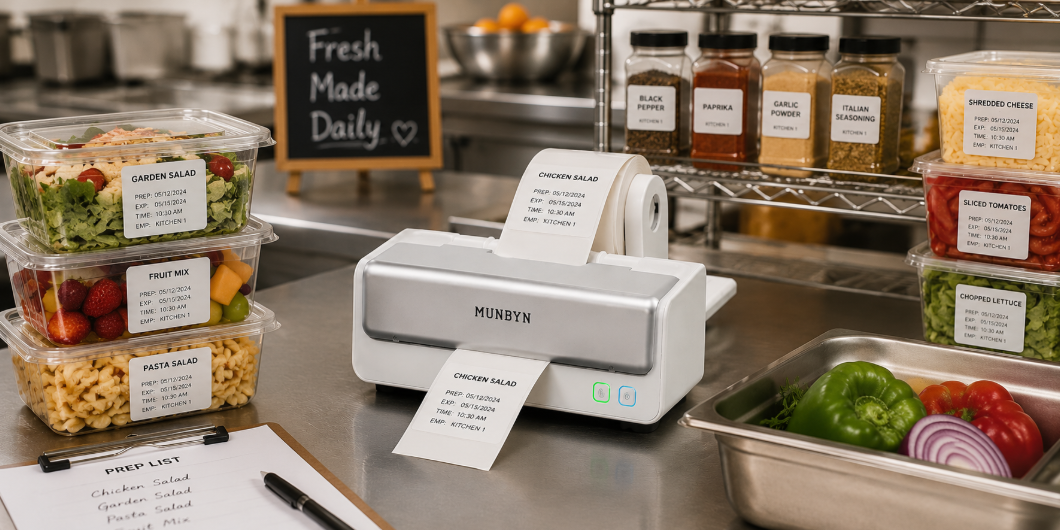
Thermal labels are popular with small business owners because they use a special, less sticky adhesive. This makes it easier for end users – customers or employees – to peel off the labels, which usually leaves less or no adhesive residue. This is particularly advantageous for reusable or recyclable items such as shipping boxes or product packaging. The weaker adhesive also reduces the risk of damage to the labeled item. As a small business owner who needs to label products, packages, files, or individual promotional stickers, thermal labels that are easy to remove and leave little residue offer a reliable and practical solution.
Important notes
Before using any of these methods, test them on a small area to ensure no damage occurs. Also, be careful when handling chemicals, especially near food or beverages. Avoid skin contact and do not eat, drink, or smoke while removing sticker residue.
You'll find that removing label and sticker residue is easier than you might think. With these tips and tricks, you can effortlessly remove adhesive residue from kitchen bottles, product packaging, clothing, and much more.

Share:
How to Print Round Stickers in Word
How to Make Creative Stickers in 4 Easy Steps