


 Netherlands
 Bestseller
 All Printers
 All Labels
 Money Counters
 All Accessories
With the boom in e-commerce, there is a growing need for fast, efficient, and cost-effective printing solutions for shipping labels, receipts, and invoices. As an online seller, choosing the right printer is essential for the smooth running of your business. In this post, we'll look at the benefits of thermal printing technology and give you tips on choosing the best printer for your small business. We'll also compare thermal printers with laser printers and discuss the different types of thermal label printers. So, let's get started!
Overview of thermal printing technology
Thermal printing technology uses heat to print images and text on thermal paper or labels. The heat activates a chemical coating on the paper, creating a clear and sharp image. There are two different types of thermal printing, thermal transfer printing and direct thermal printing, which we will discuss in more detail later. Thermal printers are beneficial for small businesses because they produce high-quality prints quickly and quietly, and have low maintenance costs. Unlike inkjet or laser printers, thermal printers do not require ink cartridges or toner cartridges, which can save money in the long run.

Thermal printer vs. laser printer
Speed
Laser printers are generally faster than thermal printers when it comes to printing large quantities of text documents. However, thermal printers are faster (up to 72 labels per minute) when it comes to printing labels and receipts, which are crucial for small businesses.
Print quality
Laser printers are known for their high print quality. They use toner cartridges to produce crisp text and graphics, making them an ideal choice for printing documents and presentations. In contrast, thermal printers use heat to create images and text on thermal paper or labels. While thermal printing technology produces clear and sharp prints, it is not as sharp as laser printing.
Cost
Laser printers are more expensive to purchase than thermal printers. Toner cartridges are more expensive than thermal paper or labels. Thermal printers, on the other hand, do not require ink or toner cartridges, making them a more cost-effective option for small businesses.
Maintenance
Laser printers have higher maintenance costs than thermal printers. They require regular replacement of toner cartridges, drums, fusers, and other parts, which can add up to significant costs over time. Laser printers also require regular cleaning and maintenance to prevent paper jams and other problems.
Thermal printers, on the other hand, are very low maintenance. They do not use ink or toner cartridges, so they do not need to be replaced. Instead, they use thermal paper or labels, which are inexpensive and widely available. Thermal printers need to be cleaned regularly to remove dust and debris, but this is a simple and quick process.
Printing needs:
Laser printers are suitable for businesses that need high-quality prints for documents and presentations. They are also ideal for printing photos and graphics. However, for small businesses that need to print shipping labels and receipts quickly and quietly, they may not be the best choice.
Thermal printers are better suited for these scenarios as they produce high-quality prints quickly and quietly with low maintenance costs.

Direct thermal vs. thermal transfer
Printing technology
Direct thermal printing uses heat-sensitive paper or labels to create an image. The printhead heats up and creates an image on the label or paper.
Thermal transfer printing, on the other hand, uses a ribbon and heat to transfer ink or resin onto paper or labels. The printhead heats up and melts the ink or resin onto the label or paper.
Cost
Direct thermal printing is more cost-effective than thermal transfer printing, as it does not require a ribbon or ink, which can add up to costs over time. Direct thermal printing is ideal for small business owners who need to create simple black and white images and have short-term labeling needs, such as for shipping labels or receipts.
In addition, direct thermal printing is often simpler and easier to maintain than thermal transfer printing. The technology is less complex, which means there are fewer components that can break down or require maintenance. This can also lead to cost savings in the long run.
In contrast, thermal transfer printing requires the use of additional consumables such as ribbons and corresponding hardware components, which can increase the overall cost of printing. In addition, the ribbon must be compatible with the media substrate used – i.e., the label material. If the ribbon is not compatible, this can lead to problems in the printer or poor print quality.
Label quality
Thermal transfer printing generally produces higher quality prints than direct thermal printing. By using ink or resin, thermal transfer printing can create more detailed images with higher resolution.
However, for small business owners who primarily need simple black and white images such as shipping labels or product information, direct thermal printing may be sufficient.
Durability
Thermal transfer printing uses ink or resin to transfer the image onto the label material. The ink or resin is more durable and long-lasting than the heat-sensitive paper used in direct thermal printing. Thermal transfer prints are resistant to fading, moisture, and even chemicals, making them ideal for long-term labeling requirements.
Direct thermal printing uses heat-sensitive paper that reacts to heat, which can cause the image to fade over time (months or years), especially if exposed to sunlight or heat. Therefore, direct thermal printing is ideal for short-term labeling requirements such as shipping labels and stickers.
However, there are ways to extend the life of direct thermal labels. One way is to use a higher quality label material. These often have a special coating that protects the label from fading or deterioration. These coatings can also protect the label from moisture and chemicals. Another way is to store them properly: direct thermal labels should be stored in a cool, dry place, away from direct sunlight and heat sources. It is also important to use a high-quality direct thermal printer with a good quality printhead that ensures the label material is heated evenly and consistently.
Even if direct thermal labels do not last as long as thermal transfer labels, the steps mentioned above can help extend their lifespan and make them a more viable option for certain labeling requirements.

Best label printer for small businesses
When small business owners choose a label printer, they should consider several factors.
- Budget: As most small businesses have financial constraints, it is important to find an affordable label printer. Direct thermal printers are often more cost-effective than thermal transfer printers because they require fewer consumables such as ink and ribbon.
- Print speed: During peak periods, businesses need to be able to print labels quickly. Therefore, a fast printer with minimal setup time is crucial. Both direct thermal and thermal transfer printers offer high print speeds, making them ideal for businesses that need to print on the go.
- Label size and type: The type and size of labels to be printed are also important. Some printers are better suited for certain label types or sizes. The standard size of shipping labels is often 4 x 6 inches, which is accepted by large carriers such as UPS and USPS. A standard direct thermal label printer that supports this size might be sufficient for many requirements.
- Durability: Businesses should also consider the durability of labels, especially if they need labels that must withstand harsh conditions or long-term use. In such cases, a thermal transfer printer might be the better choice.
- Ease of use: For small business owners, it is important to choose a printer that is easy to set up and operate. They prefer intuitive software and a user-friendly interface. Direct thermal printers are often more user-friendly because they tend to be less complex to operate.
- Sustainability: This aspect is becoming increasingly important. Many small business owners want to do their part to reduce environmental impact, and using environmentally friendly packaging is one way to do that. A direct thermal printer that does not require ink or toner cartridges is an excellent choice for environmentally conscious businesses. Since thermal labels are recyclable, they represent an even more environmentally friendly option. By choosing a direct thermal printer, small business owners can reduce their ecological footprint and contribute to a more sustainable future.
- Maintenance requirements: Finally, maintenance requirements also play a role. No entrepreneur wants a printer with high maintenance needs or one that requires numerous consumables or hardware components. Direct thermal printers are generally lower maintenance than thermal transfer printers and require fewer consumables and components.
Wrapping up
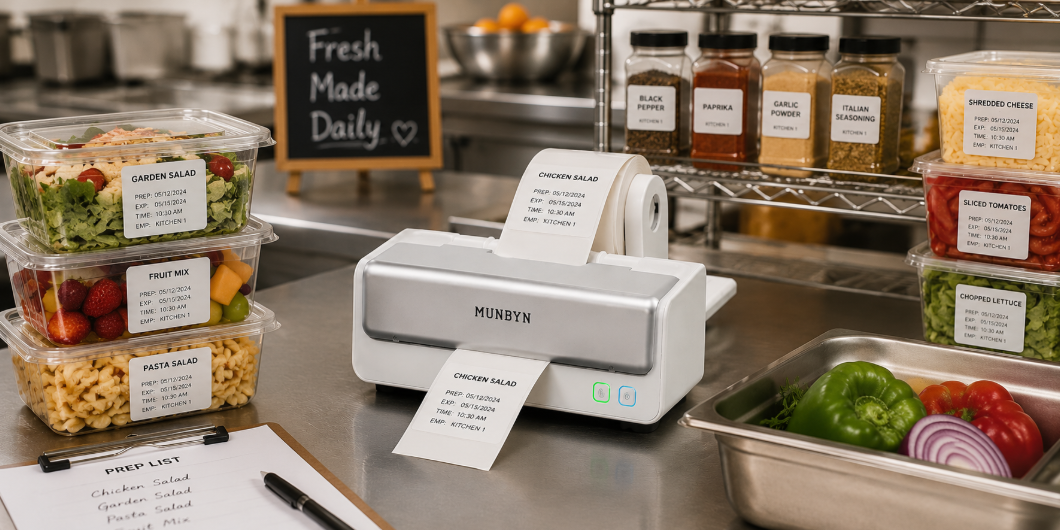
Choosing the right printer is crucial for small business owners who need to print labels, receipts, and other important documents quickly and efficiently. Thermal printing technology offers numerous advantages, including low maintenance costs, high-quality prints, and ease of use. When choosing a printer, factors such as print speed, label size, and budget should be considered. For small businesses with lower print volumes, for example, the MUNBYN direct thermal printer offers a reliable and cost-effective solution. If you would like to learn more about thermal printers and their benefits for your business, please visit our other resources and product recommendations. Don't let an inadequate printing process slow down your business – invest in the right printer today!

Share:
7 Ways to Use ChatGPT for Your Etsy Shop
An Ultimate Guide to Choosing Munbyn Label Printers